








Learn with us
All Archived Activity

Common Dermatological Disorders
Are you a general practitioner?
Keen to learn from home and be ready to deal with different cases that you might face in clinic? Then this session is for you.
A highly interactive online session is designed to equip the general practitioner with a sound understanding of skin conditions as they present in practice. Dr. Nada will provide you with up-to-date clinical information about treatment and referral guidelines for common skin conditions seen in general practice
Free
Free

How to prepare for your interview? (5th Edition)
Struggling to feel confident about your interview technique? Need to boost your confidence and gain some expert advice? Then this workshop is designed for you!
Whether you’re experienced or a novice candidate, interviewing for a job is not as easy as it sounds. A number of skills are required to present yourself effectively. Our interactive workshop will cover interview tips and strategies to prepare you for your big day, it also includes a mock Interview for 20 mins with one participant that will be selected randomly. After this workshop participants will have a clear understanding of the methods that employers use to assess candidates.
189.75
SAR
189.75
SAR

تحديث الخطة الاستراتيجية لكلية الطب بجامعة طيبة
تحديث الخطة الاستراتيجية الخاصة بالكلية
Onsite: , Medina , Saudi Arabia
Free
Free
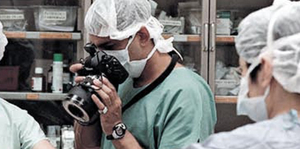
Medical Photography
Medical photography is a specialized area of photography that concerns itself with the documentation of the clinical presentation of patients, medical and surgical procedures, and different types of specimens. Join us in this session with Dr. Saad Al-Ghamdi, a general surgery resident who has passion and experience in medical photography.
Free
Free

Item analysis of theoretical exams
Are you a faculty member?
Keen to learn from your place about Assessment? then this interactive online session is for you!
Join us in this event with Prof. Omayma Hamed, who is experienced with quality metrics interpretation of an exam to come out with meaningful information. This session will help you to draw inferences that are meaningful enough to take decisions about the exam. The following will be covered in this session:
1.Ideal exam framework
2.Test and item statistics for MCQ exams
3.Exercise: Conducting key validation
4.A sampling-oriented framework for thinking about reproducibility of scores on assessment
Free
Free

2nd Comprehensive research Course
This second Comprehensive Research Course is intended to introduce medical students, interns, and residents to the important aspects of research. The course will cover 10 main topics in research, that will take you through an amazing journey with qualified consultants experienced in research.
This course will help you to overcome the common research misconceptions. Participants can either enroll on to the full course or, alternatively, they can enroll in specific sessions. Registering in the full course will give you the opportunity to access the recordings for 4 months from registration date. Not only that, you will also get an extra online session with a group of participants to discuss general points and questions you may have with one of the consultants.
Start From
Price not set yet!
Start From
Price not set yet!

Introduction to General Surgery MCQ Course
Medical student struggling how to get a high mark in your general surgery exam?
Exam on doors and running out of time?
Need some tricks and tips to solve exam's MCQs?
This is an introduction version of the full review course
Save your seat now!
Free
Free

Introduction to Internal Medicine MCQ Course
Medical student struggling how to get a high mark in your internal medicine exam?
Exam on doors and running out of time?
Need some tricks and tips to solve exam's MCQs?
This is an introduction version of the full review course
Save your seat now!
Free
Free
Work-based Assessment and Multisource Feedback
Outline:
* Why do we want to assess in the workplace?
* What is WBA & MSF?
* What is the validity evidence of WBA & MSF?
* What are the challenges?
* Introduction to EPA’s (Entrustable professional activities).
Speaker:
*Professor Julian Archer MRCPCH, MEd, PhD, FAcadMEd, FHEA*
Chair in Medical Education Research & Director of the Collaboration for the Advancement of Medical Education Research & Assessment (CAMERA),
Plymouth University Peninsula Schools of Medicine & Dentistry
Free
Free
12th Hot Topics in Pediatrics
An annual symposium that discuss the latest pediatric topics.
Start From
172.5
SAR
Start From
172.5
SAR

Common pediatrics viral infections in PHC setting
One of the most common topics every family medicine resident should master is approaching pediatric patients presenting to primary health care with viral infection.
In this lecture, we are aiming to help you gain the knowledge and master the topic.
Free
Free

Hematology Lab Interpretation
Hematological tests are tests that studies blood and its component. Basic CBC and blood films are the two main components to diagnose any hematological disorder.
In order to interpret these lab results, it’s crucial to understand the guiding principles and concepts behind it.
This session will cover CBC and blood film interpretation.
166.75
SAR
166.75
SAR

1st Pediatrics Emergency Crash Course
To our pediatric residents and interested medical interns. VMA presents to you a three-day course with qualified consultants, 2 hours each day (8:00-10:00 PM). 1st Pediatrics Emergency Crash Course is designed to provide the common cases and knowledge required to care for pediatric patients in the emergency setting during on-calls or ER shifts.The course will cover the following topics:
Day 1:
- Management of status asthmaticus emergency settings
- Management of foreign body ingestion/ poisoning in emergency settings
- Management of trauma/burn in emergency settings
Day 2:
- Management of cardiac arrhythmia "SVT, AF" in emergency settings
- Oncological Emergencies
- Management of Status epileptics in emergency settings
Day 3:
- Management of hyper/ hypokalemia
- Management of hyper/ hyponatremia
- Management of hyper/ hypocalcemia
- DKA
402.5
SAR
402.5
SAR

How to write and Publish a Case report ?
This one hour training course is meant for any health care professional who is interested in writing and publishing case reports in local and international bio-medical Journals. Although case reports are considered the lowest form of evidence in the hierarchy of EBM, but they can be valuable in sharing experiences and learning the art of medical writing. Recently many international journals have been established which exclusively publish only case report
Free
Free
Free

Final Clinical Surgery Exam
This is a one-hour and 30 minutes session with a fresh graduate resident of General Surgery, who has been through the final clinical board exam situation and is familiar with the exam tricks. Not only that he also got a very high score in the exam.
The session will include two cases that always come up in the exam. There will be a 15-20 min live discussion between one of the participants and the speaker on a case scenario, followed by a 10 min questions/feedback for clarification. The cases will include a scenario with results and images of both the clinical and radiological findings. This course is aimed at general surgery residents.
Free
Free
Chemistry Lab Interpretation
A blood chemistry panel is a common test used to evaluate a variety of components that provide general information about the function of important organs in the body and it screens for a wide range of problems, including kidney, liver, heart, adrenal, endocrine and neuromuscular disorders by measuring the levels of important electrolytes and other chemicals like glucose, blood urea nitrogen, carbon dioxide and others. In order to interpret chemistry lab results it’s crucial to understand the guiding principles and concepts behind it.
This session will cover renal panel and electrolytes.
166.75
SAR
166.75
SAR

Lab Interpretation Course
Enrolling in this Lab Interpretation package allows you to access the following courses at a reduced price compared to purchasing the individual course price.
• Chemistry Lab Interpretation | 27-28/2/2018
• Hematology Lab Interpretation | 6-7/3/2018
• Serology Lab Interpretation | 27-28/3/2018
Each course will discuss its own lab tests and interpret the results in a clinical scenario form. Don’t wait too long, join the course and start learning now!
402.5
SAR
402.5
SAR

Professionalism in Nursing Field
As a nurse working in a medical industry, facing different types of people, with different medical conditions, there is an inherent need for equality and human dignity, and this is a part of the expectation of professionalism that nurses have.
Professionalism is not something that comes easy, and therefore it is important that nurses evaluate themselves on continuous basis to ensure that they are maintaining the standards that make them professional. There are a number of questions that nurses can ask themselves each day, for this purpose we offer this lecture for you.
Free
Free

Family Medicine OSCE Session
This is a one-hour and 30 minutes session with Dr.Mohammed Al-Ateeq, who has an experience with the final clinical board exam situation and the exam tricks. The session will include 2-3 cases that always come up in the exam. There will be a 15-20 min live discussion between one of the participants and the speaker on a case scenario, followed by a 10 min questions/feedback for clarification. The cases will include an approach to history taking and management stations in a CRAPRIOPS model. This course is aimed at Family Medicine residents.
Free
Free